
Three Practical Takeaways from My Rewrite of Great Expectations
Reflections from near the halfway mark

I am closing in on the halfway mark of my target. I have retyped word-for-word 24 chapters of Great Expectations on Youtube; I still have 34 left but having typed over 70k words of the 183,000-word novel, I think I’m ready to share some takeaways. Of course, you can watch my recap videos or tune in for the livestreams on Tuesdays and Thursdays at 930pm central. You can also rewatch/relisten to the livestreams. If you do so, I recommend speeding up the video to 1.5 or even 2x.
Before I get to the takeaways, let me just say that I’m very pleased with myself. I set out on this project in mid-April, and now it’s mid-August, and just by putting my butt in my seat twice a week, the project has incrementally built on itself and I am halfway through retyping a classic! Even though I’m not under attack and I’m a free man in a free (ish) world, I am defensive of this project because we have limited time on this earth and how we spend it is a question of values and culture and I feel compelled to offer some justification for having spent 25+ hours on this so far.

These craft takeaways represent the project’s utility. As I anticipated at the time of launch, I have gained a lot of craft insight that I don’t think I would have picked up on simply by reading, even close reading. Something about the durational quality of the attention from retyping led me to these insights.
One last thing before I share them; this newsletter is NOT a craft newsletter. It’s a newsletter about information saturation. Therefore, I’m keeping these points brief. I’ve written about them more extensively on Small Gold Objects, the craft newsletter that I write for along with my colleagues at The Office of Modern Composition.
Craft Takeaways:
Tethering --
Dickens tethers certain words or families of words to certain characters as ‘signatures’ and these aren’t necessarily physical descriptors. In Estella’s case, the words are ‘scorn’, ‘despise’, and ‘derision’ -- over the course of twenty chapters, what happens is this character and this group of words get sort of paired together or the associated neurons fire together and so durationally we feel like we have to come to know the character but really it’s very targeted, repeated associative pairing.
Now, this may seem obvious. But here’s the deeper insight. Or the insight within the insight, if you will. I think sometimes writers are overworried about their artifice being detected; it’s okay if artifice is obvious at times, if it’s still effective and the neurological pairing of tethering is worth the exposed artifice. I hope that makes sense; if you want to discuss it further, buy me a drink.
Read the Small Gold Objects post on ‘tethering’ here
Staying, stay longer. Moving, move faster.
A good rule of thumb in narrative art is that when events have dramatic consequence or catharsis, you want to slow things down, and when they don’t, you speed things up. By retyping Dickens, I am deepening, on a somatic level, my understanding of when to speed up and when to slow down. I have noticed that Dickens doesn’t really do half-scenes; he either commits to a full-blooded scene or he happily does summary, if he feels like. When he wants to linger, he does; when he wants to speed up, he does. The result is a greater sense of authority.
Read the full post on Small Gold Objects
How to use minor characters busyness to make major characters more subtle
This one is still queued up for Small Gold Objects but you’re getting the preview. It hit me when I was doggedly retyping an extended scene where Pip is interacting with a number of minor characters who all board together in his tutor’s home. I realized that in chapters with minor characters, tons of events happen. But in chapters with major characters, less happens but it’s treated with greater importance. It’s such a subtle insight but it means that a huge fight between minor characters is less felt than a cutting remark from Estella; it’s so hard to give characters dignity, to make them regal. But Dickens has shown me how. Use other characters like circus clowns, heighten their activity, while your principals do very little; that will make every turn of the cheek, every word feel subtle and careful.
There’s a lot more and in each of my videos, after every re-typed paragraph, I stop and analyze why I think Dickens has made whatever choices he’s made so if you want more, you’ll find more.
But ultimately, while there is tons of utility to be derived from this project, I didn’t embark on it for utility. I do it because it is an auto-telic activity, an end in itself; I enjoy the act of retyping word for word; it settles my body. It fills with me energy. It allows me to enter a flow state through the limited stimulus field of the text. At the end of the day, it’s media consumption but at a different pace; it’s like omakase in a world of Doordash. I’m loving it so far. 34 chapters more to go!!!!
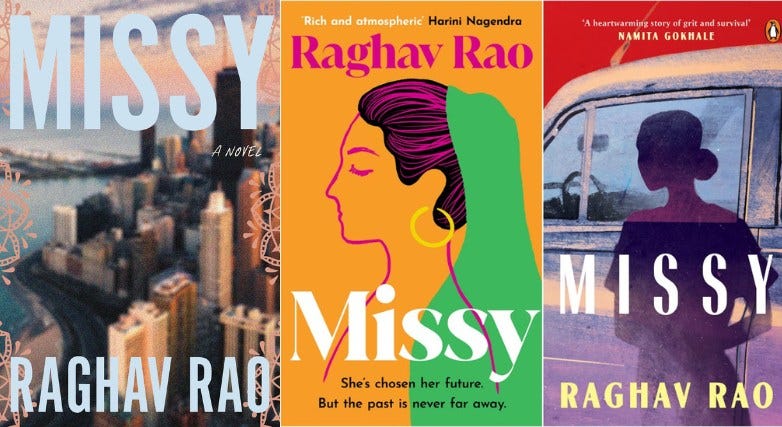
MISSY
If you have read MISSY and enjoyed it, then please leave a review and rating on Goodreads and Amazon. You may think it inconsequential; but it helps.
To buy Missy, here are the relevant links. North America. UK. India.
Thank you for this installment, Raghav. It explains perfectly how Dickens depicts Lady Dedlock in ‘Bleak House’. She is a central character and motivates so much of the plot. We feel her presence continually and, through Dickens’s observations of her, we are given a strong sense of her domineering aura. And she says so little.